Premium economy buys a larger seat with about 7-10 extra inches of pitch and a deeper recline than economy, better meals, and a quieter cabin section — at typically two to three times the economy fare. Business class buys a lie-flat bed on long-haul aircraft, lounge access, fast lanes and flexible fares — at five to ten times economy. The gap between the two cabins is not size but function: premium economy improves sitting, business class replaces it with sleeping.
Both cabins exist because airlines segment travelers by who pays — corporate for business, personal cash for premium economy — and the products are engineered to that split. This guide measures what each fare buys. AGLA News publishes information, not travel or purchase advice; product standards vary by carrier and aircraft type.
What is the physical difference between the cabins?
Measure the seat. Long-haul economy runs roughly 31-32 inches of pitch and 17-18 inches of width. Premium economy opens to about 37-38 inches of pitch, 18-19 inches of width, a recline near 20 degrees, leg rests, and often an 11-13 inch screen against economy's 9-11. Business class on current long-haul aircraft is a lie-flat bed of roughly 75-80 inches, direct aisle access on most modern layouts, and doors or privacy screens on the newest products. The premium economy cabin typically holds 21-35 seats in a 2-3-2 or 2-4-2 arrangement against business's 1-2-1. Neither cabin changes where you are going; the difference is arrival condition after a 10-hour flight — rested in one, genuinely recovered in the other.
What does each fare include beyond the seat?
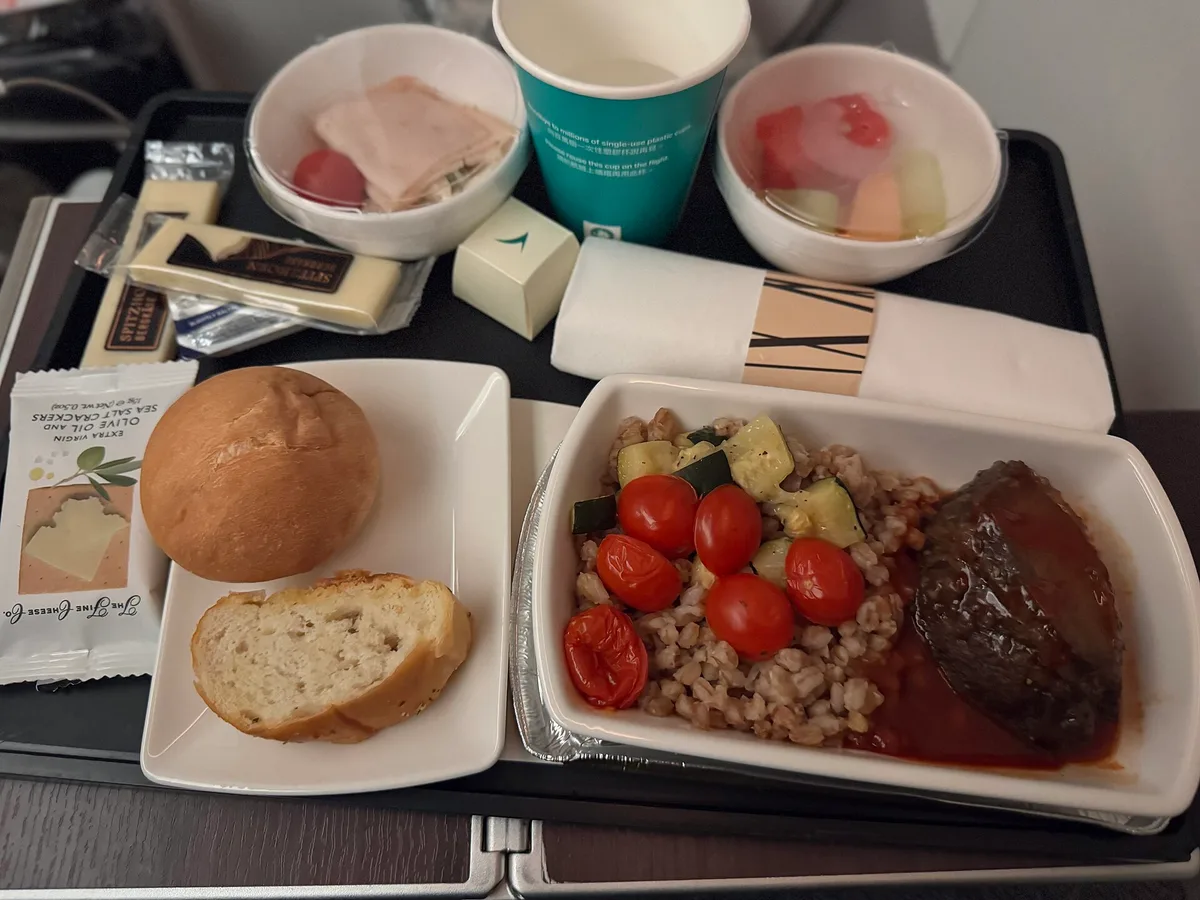
Business class bundles the ground product: lounge access, priority check-in, security and boarding where offered, upgraded baggage allowance, and flexible or refundable fare rules. Premium economy's ground benefits are thin — usually priority boarding and an extra checked bag, with lounge access absent unless bought or earned through status. Meal and amenity service sit between the two: premium economy serves upgraded economy dining on real tableware, business class serves multi-course menus with champagne and turn-down amenities. Mileage earning follows the same ladder — premium economy earns modestly above economy, business class earns at 125-150 percent or more in many programs.
When does each cabin make sense?
Premium economy is priced for the traveler paying personally on flights of roughly 8-12 hours, where the arithmetic is a few hundred dollars per added inch of comfort rather than thousands. It wins for daytime long-hauls, where lie-flat value is low, and for travelers whose status already supplies the lounge and fast lanes business class would add. Business class makes its case on overnight long-hauls where arriving rested has economic value, on corporate travel where the fare rules absorb changes, and — the reality of the cabin — is most often reached not at the fare screen but through upgrades, miles or status, which is why its sticker price overstates what most occupants paid.
How do you buy each cabin for less?
Two routes discount premium economy: bid-based upgrade auctions after booking, which carriers now run widely, and modest cash upgrade offers at check-in when the cabin is unsold — both commonly land at a fraction of the walk-up difference. Business class discounts run through award space, corporate negotiated fares, and occasional premium-sales windows on competitive routes. The consistent advice: price the upgrade paths before paying the full fare, because the airline's own revenue management sells the same seat at many prices depending on when and how it is asked for.