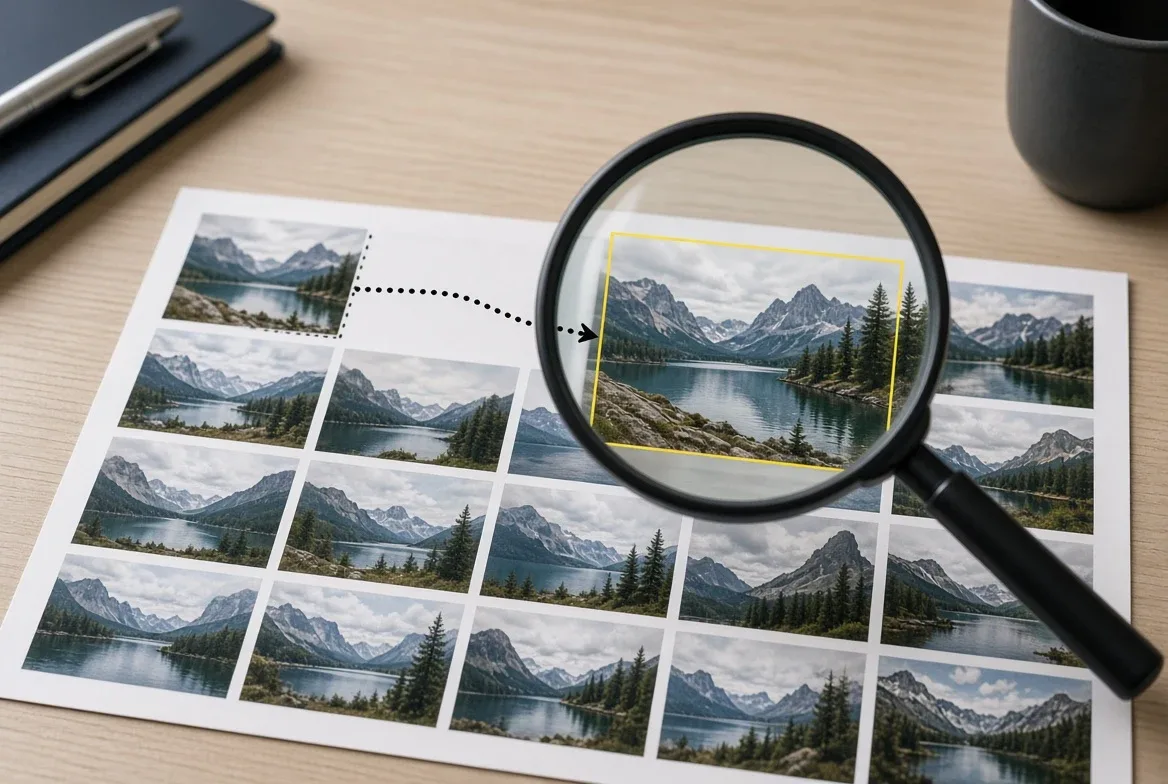
Reverse image search can confirm two things about a viral photo: where else it has appeared online, and what objects it contains. It cannot, by itself, confirm whether the photo was manipulated or when it was created. Those are the two most common questions attached to any image that starts spreading fast, and they have different answers.
What does reverse image search actually show you?
A reverse image search — uploading a picture to a search engine instead of typing words — works by matching visual patterns rather than keywords. According to Google's own support documentation for its image search and Lens tools, results can include AI overviews, search results for objects identified in the image, similar images, and websites where the same or a similar image already appears.
That last category is the one that matters for tracing a viral photo. If an image is genuinely old, reused, or miscaptioned, a reverse search often surfaces an earlier posting — a news article, a stock photo listing, a prior social post — that predates the viral caption. That earlier posting is the lead a verification effort needs: it points toward who actually took or first published the image, and when.
Can it prove a photo was faked or AI-generated?
Not on its own. Reverse image search finds matches; it does not analyze pixels for signs of editing or generation, and Google's documentation does not describe the tool as an authenticity check. It can fail to find any prior version of an image — because none was ever indexed, because the image is genuinely new, or because it was generated rather than photographed and so has no “original” to surface.
That gap is why outside verification training exists at all. Poynter's MediaWise program, part of the nonprofit's fact-checking and media-literacy work, teaches reverse image search as one step in a broader verification habit — checking who posted an image first, what they said about it, and whether other independent accounts corroborate it — rather than as a single tool that settles the question by itself.
Why does this distinction matter right now?
Because the volume of images that need this kind of scrutiny is rising. In late July 2026, Google paused a plan to add AI-generated enhancements to its satellite imagery product after pushback from journalists and open-source researchers, who warned that AI-altered satellite images could be used to misrepresent real locations and events. The concern was not hypothetical: once an image can be plausibly altered or generated, a match-based search that only asks “has this exact image appeared before” becomes a weaker signal on its own.
That is the practical reason a single reverse-image hit is a starting point, not a verdict. A match confirms the image existed somewhere before the viral post. It does not confirm the viral caption's claim about who is in it, where it was taken, or when — those still require finding and reading whatever that earlier posting actually said.
How do fact-checkers actually use it on a viral photo?
The method is sequential. First, run the image through a reverse search to see if an earlier version exists anywhere. Second, if a match turns up, open it and read the original context — the outlet, the date, the caption the image carried before it went viral. Third, treat a caption change between the original posting and the viral version as the finding itself: the image may be real, but the claim attached to it in the viral post is a separate thing that needs its own named source.
When no earlier version turns up at all, that is also information — it means the image cannot yet be traced to a documented origin, which is different from proving it is fake. In that case, the accurate description is that the image's origin is unconfirmed, not that it has been debunked.
What reverse image search cannot do
It cannot date an image precisely, cannot confirm a location on its own, cannot detect AI generation reliably, and cannot substitute for finding a named original source. It is one search technique inside a larger verification process, not a verdict machine. Used correctly, it narrows down where to look next. Used alone, a “no results found” or a single weak match gets over-read constantly — treated as proof either way when it is neither.
For a related trending perspective, read Trace a viral photo's origin with reverse image search.
For more context, read What Actually Happens When CFIUS Reviews a Foreign Deal.