Sustainable aviation fuel (SAF) is jet fuel made from renewable or waste feedstocks — used cooking oil, agricultural residues, municipal waste, or alcohol synthesized from captured carbon — and it is approved to blend directly into today's aircraft and airport fuel systems up to 50 percent, per the ASTM D7566 certification pathway. The catch is volume: global SAF production reached roughly 1 million tonnes in 2024-2025 against worldwide jet-fuel demand near 300 million tonnes, per industry compilations by IATA — about one percent of what airlines burn.
This guide explains the technology and market; it is not investment or environmental-compliance advice.
How is SAF actually made?
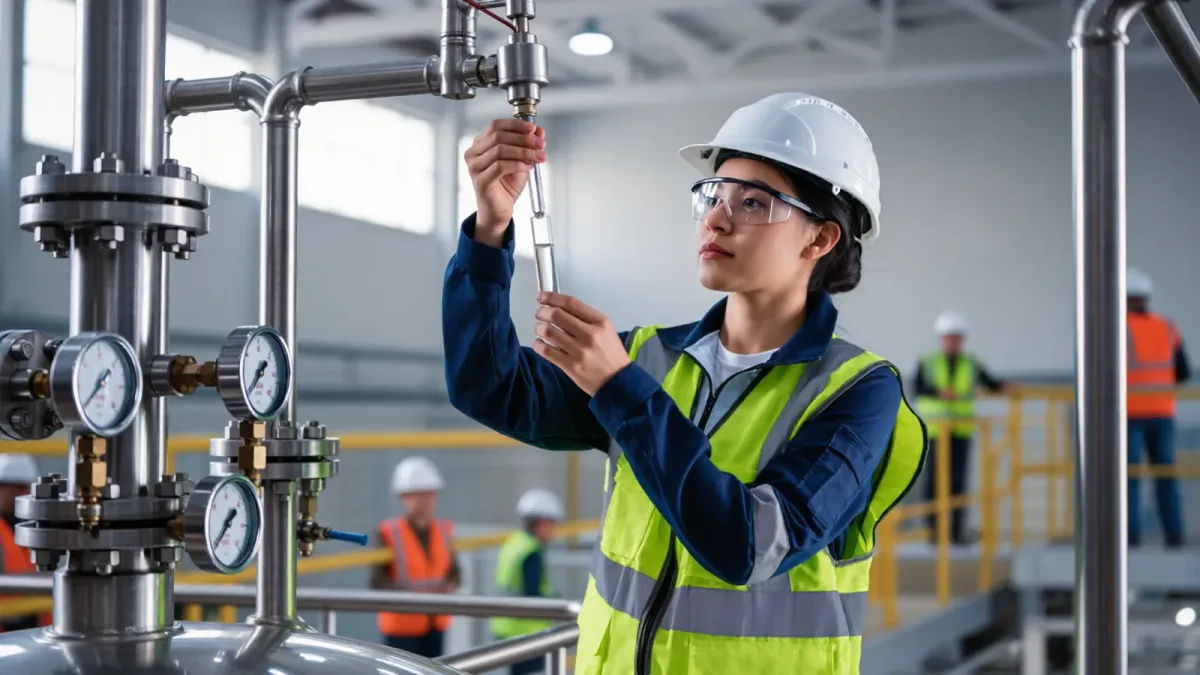
The dominant route today is HEFA — hydroprocessed esters and fatty acids. Feedstock is waste fats and oils: used cooking oil, tallow, grease. Hydrogen strips the oxygen and saturates the carbon chains, leaving hydrocarbons in the kerosene range. HEFA supplies nearly all commercial SAF available today because the process is a proven extension of existing refinery technology.
The routes that scale beyond it are still industrializing. Alcohol-to-jet converts ethanol or isobutanol into kerosene-range molecules, with plants coming online in the U.S. Midwest. Power-to-liquid (PtL) synthesis builds fuel from green hydrogen and captured CO2 — theoretically near-limitless in volume, currently the most expensive pathway by a wide margin. Each pathway carries its own ASTM approval and blend cap, which is why the 50 percent ceiling, not 100 percent, defines today's fleet operations.
Why is supply stuck around one percent?
Three constraints compound. Feedstock: the world's used cooking oil is already collected and spoken for, and HEFA cannot grow past what waste fats supply. Capital: a new SAF facility costs hundreds of millions to billions of dollars, and only announced projects with committed financing will deliver — of the announcements, industry trackers consistently find a fraction reach construction. Price: SAF carries a premium of roughly two to five times conventional kerosene, and airlines absorb it only where regulation or corporate customers pay the difference.
The policy lever is doing most of the near-term lifting. The EU's ReFuelEU mandate requires a rising SAF share at EU airports from 2025, and the U.S. approach leans on tax credits under the Inflation Reduction Act's 40B and 45Z provisions. Mandates create guaranteed demand; credits narrow the price gap.
What does SAF mean for a traveler's ticket?
Burned in the same engines, SAF cuts lifecycle carbon emissions by up to roughly 80 percent depending on pathway and feedstock, per IATA figures — no aircraft change required, which is why it is aviation's primary decarbonization tool for the 2030s. Airlines sell SAF certificates and corporate programs to fund volume; a passenger's share of the premium on an average ticket remains small but non-zero where mandates apply.
The honest summary for 2026: the technology works and the aircraft need no modification, but the constraint is industrial. Watch construction starts at alcohol-to-jet and PtL plants — not airline announcements — as the leading indicator of when SAF stops being a rounding error in the fuel ledger.