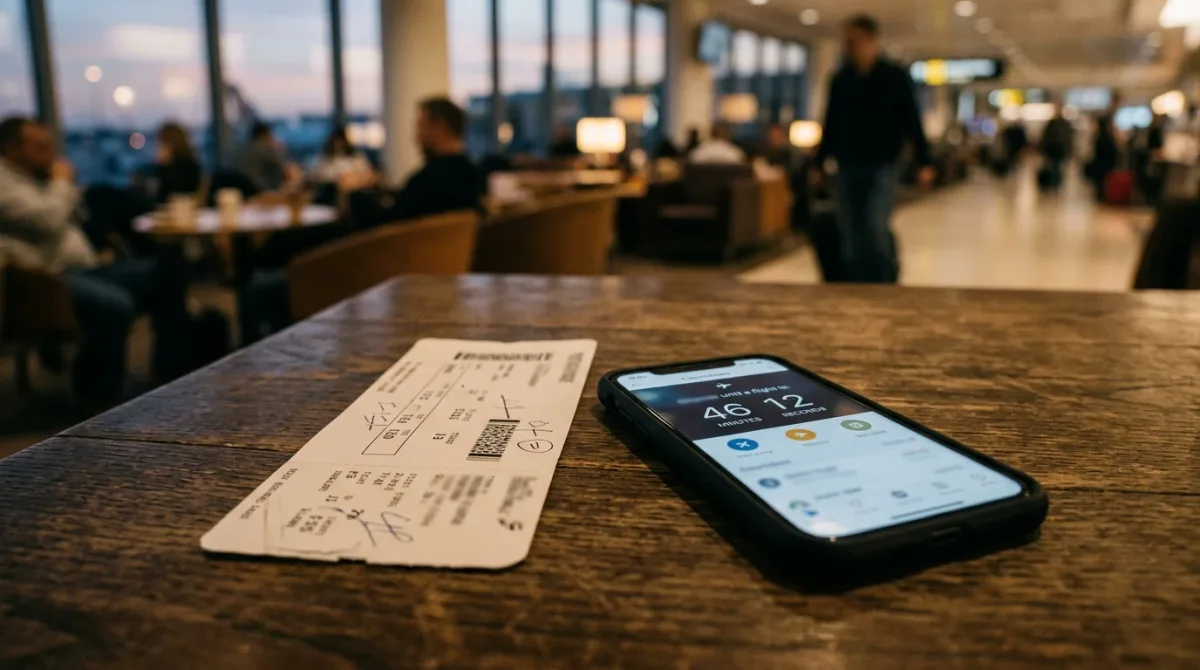
As of August 2026, US Department of Transportation rules require airlines to let you cancel a reservation within 24 hours of booking for a full refund, no penalty — but only if you bought the ticket at least seven days before the flight's scheduled departure. Airlines can meet this obligation either by allowing that free 24-hour cancellation or by holding your fare for 24 hours before you have to pay, and they only have to offer one of the two, not both.
That distinction matters more than most travelers realize. If an airline chooses the fare-hold option instead of free cancellation, you never actually paid for the ticket in the first place, so there's nothing to refund — you simply let the hold expire. Either way, the practical outcome for a traveler who changes their mind fast is the same: no money lost, as long as you act inside the window and booked directly with the airline.
Which bookings actually qualify?
The rule covers tickets bought straight from a US or foreign carrier at least seven days ahead of departure, according to the US Department of Transportation. Same-week bookings and tickets purchased through a third-party site or traditional travel agent fall outside federal protection — those cancellations depend entirely on the seller's own policy, not the government rule.
That third-party gap is the one people miss most. Book through an online travel agency and you're trusting that company's return policy, not the DOT's. If a fully protected cancellation matters to you, buy directly on the airline's own site or app.
The seven-day threshold is measured against the flight's scheduled departure, not against a return leg or connecting segment, so a round-trip booked six days before you fly out doesn't qualify even if the whole trip runs weeks. Award tickets booked with miles are generally treated the same as paid tickets for this purpose, since the rule covers the reservation rather than the payment method — though it's worth confirming with the specific carrier, since loyalty programs sometimes layer their own, more generous cancellation terms on top of the federal floor.
What do you get back, and how fast?
When a cancellation under the rule triggers a refund, the DOT requires airlines to process it within seven business days for a credit card purchase and 20 business days for cash or check. The refund has to be the full fare — taxes and fees included, with no cancellation penalty deducted.
The rule does not extend to everything wrapped into a booking. Changing the date on your ticket, fixing a misspelled name, or backing out of a seat-assignment or bag fee purchased separately isn't guaranteed to be free — airlines can still charge for those, since the rule covers cancellation of the reservation itself, not modifications to it.
How do individual airlines apply it?
Carriers implement the same federal floor slightly differently. Alaska Airlines, for instance, allows cancellation of any reservation within 24 hours of booking as long as travel starts more than 24 hours after purchase — a version of the rule that isn't tied to the seven-day window at all. Hawaiian Airlines ties its free-cancellation window to the same seven-day-out condition the DOT rule sets. Both examples show the pattern: airlines can be more generous than the federal minimum, but not less.
The practical lesson holds across carriers: the federal rule is a guaranteed floor, not a ceiling. Some airlines choose to extend cancellation flexibility further, and basic-economy or restricted fares can still carry standard change and cancellation fees the moment that first 24 hours ends. It's worth checking the specific fare rules shown at booking rather than assuming every airline, and every fare type on that airline, treats a next-day change the same way.
| Question | Answer, as of August 2026 |
|---|---|
| Minimum days before departure to qualify | 7 days |
| Cancellation window | 24 hours from booking |
| Refund timing (credit card) | Within 7 business days |
| Refund timing (cash or check) | Within 20 business days |
| Covers third-party bookings? | No |
| Official source | US Department of Transportation, Aviation Consumer Protection |
What should you actually do at booking?
Book directly with the airline whenever the itinerary isn't fully settled. Confirm the departure date is at least seven days out if you want the federal cancellation right rather than an airline's optional, narrower version. Check the confirmation email for the airline's own stated cancellation window — some carriers publish it in the fine print — and cancel through the airline's own site or app rather than a phone-only channel to keep a timestamped record.
None of this is legal or immigration advice, and it isn't a guarantee any specific airline will process your case the way this piece describes — rules change, and individual bookings can have their own quirks. Verify the current policy on the airline's own site or the DOT's before you count on it.
For a related visas perspective, read How the Visa Waiver Program Actually Works: ESTA, Fees, and Who Qualifies.
For more context, read What Actually Happens When CFIUS Reviews a Foreign Deal.