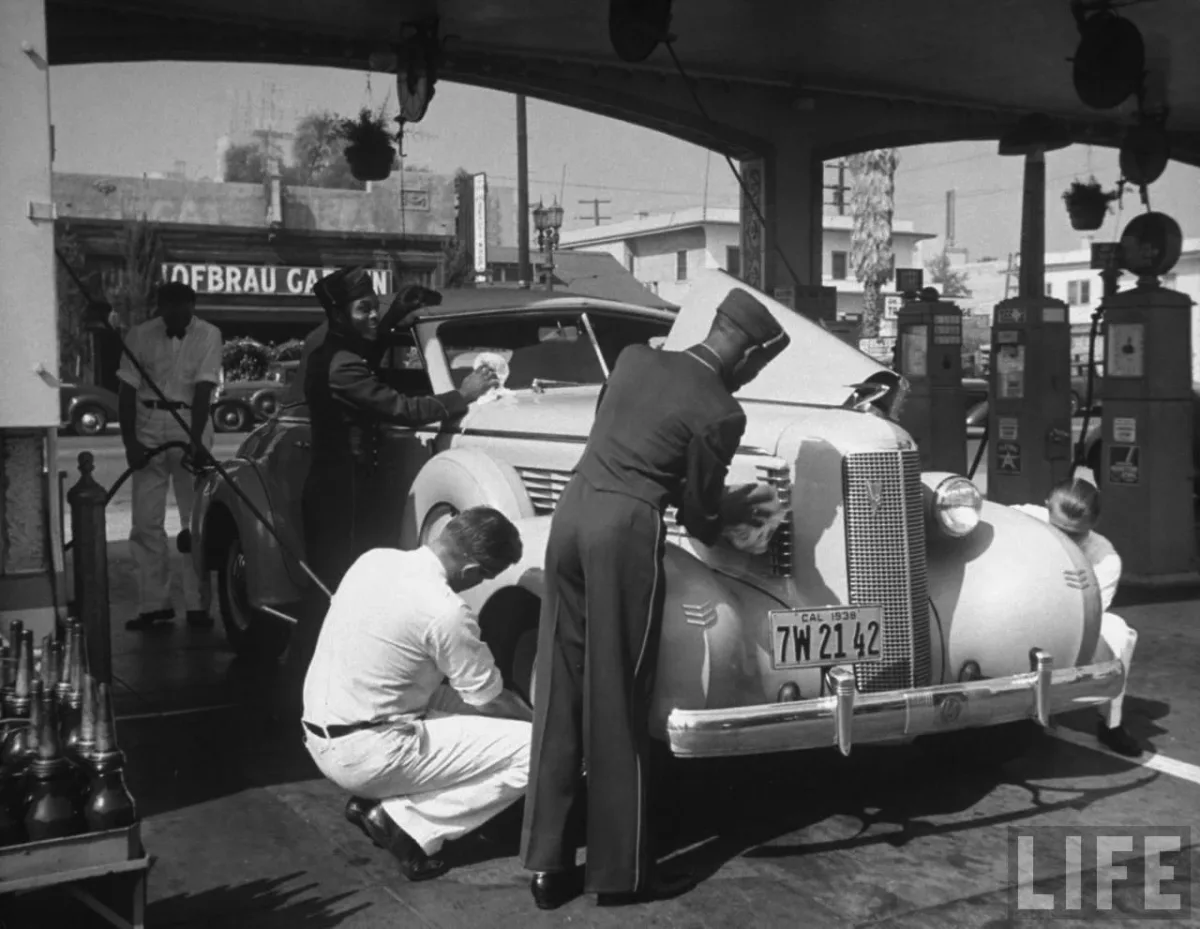
New Jersey drivers still cannot legally pump their own gasoline. The rule lives in the Retail Gasoline Dispensing Safety Act, N.J.S.A. 34:3A-4 et seq., enforced by the state Department of Labor and Workforce Development, and it holds at every retail pump in the state, in Paterson and in Cape May alike. It is the last statewide ban of its kind in the country.
Why can't drivers in New Jersey pump their own gas?
Because state law says only a trained attendant may do it. The Labor Department's plain-language summary of the act states that a station may not permit any person who is not an attendant to dispense fuel, and it defines "attendant" as a retail dealer or an employee of a retail dealer.
The practice is older than the current statute. Drivers have been barred from pumping their own gas in New Jersey since 1949, CBS News reported in its coverage of Oregon's decision to let drivers fuel up themselves. The current act dates to P.L.1989, c.263, and its rules are spelled out in regulation at N.J.A.C. 12:196.
The origin was a price fight, not a safety scare. A research blog from the Knee Regulatory Research Center at West Virginia University describes a small station trying to undercut larger competitors by offering cheaper self-service; the established stations lobbied against it, citing safety and job protection, and the ban took effect in 1949.
What does the law actually require at the pump?
More than the no-self-service line most drivers know. Under the Labor Department's summary, an attendant must receive fuel dispensing instruction plus one full working day of supervised experience before working a pump. The engine must be off while the tank is filled. Smoking while dispensing is prohibited.
Stations also may not dispense fuel into unapproved portable containers, and each station must have a remote emergency shut-off switch. Motorcyclists have their own line in the regulations: they must dismount while the bike is fueled, under N.J.A.C. 12:196-1.3(d).
The enforcement office is not a hotline curiosity. The department's Office of Public Safety Compliance lists a phone number, (609) 292-2096, and an email address, [email protected], for questions about the act.
Are there places in New Jersey where you can pump your own?
Yes, and they are narrow. The Labor Department's summary lists marine service stations, aircraft fueling stations, and gasoline stations an employer operates solely for its own employees, not open to the public, as outside the requirement. Diesel fuel dispensing is also listed as an exception.
That last one is why a driver at a truck pump may see something that looks like a violation and is not. The exceptions are set by the act and its regulations, not by a station's own policy, and questions about a specific station belong with the enforcement office rather than the counter clerk.
What happens when the rule is broken?
The penalties land on the station. For a first offense, the Labor Department's summary sets a fine of not less than $50 and not more than $250. Subsequent offenses carry a fine of not more than $500. Each day a gasoline station operates in violation counts as a separate violation.
CBS News, reporting on the ban's status after Oregon changed course, wrote that violators of the New Jersey pump ban could be fined up to $500.
Is Trenton about to change it?
A bill is filed, which is not the same as a bill moving. Senate Bill 1047, the "Motorist Fueling Choice and Convenience Act," sponsored by Sen. Jon M. Bramnick of District 21, was pre-filed for introduction in the 2026 session and would amend P.L.1989, c.263 to permit voluntary self-service.
The bill's own text makes the argument that New Jersey is the only state in the nation with a full statewide prohibition on self-service gasoline sales, and it points to Federal Trade Commission findings that self-service poses minimal safety risk. Similar bills have been introduced in past sessions without becoming law.
New Jersey did not arrive at last place by moving. Oregon, which had restricted self-service since 1951 and carved out rural exceptions starting in 2018, passed House Bill 2426; under that law at least half of a station's pumps must still offer attended service, CBS News reported.
What would S1047 change at the pump?
It would make full service a floor rather than the only option. Under the bill as filed, a station with more than four dispensers would still have to offer full-service gasoline from 8 a.m. to 8 p.m., and self-service fuel could be sold at a discount under state pricing rules.
The bill also carries accessibility language: free attendant assistance for drivers with an appropriate disability permit, and, at a self-service-only station, either a calling device at one pump or an assistance phone number posted on every dispenser. It would preempt local ordinances restricting self-service and bar franchise agreements from dictating a station's operating model.
Who has something at stake?
Attendants, first. The West Virginia University research center's post estimates about 7,000 gas station attendants employed in New Jersey, and job protection has been part of the argument for the ban since 1949.
On the other side is price. That same post cites an expected decrease of roughly 4.4 cents per gallon if the ban were removed. It also notes what any Turnpike rest stop conversation confirms: the ban has become a cultural marker, defended by drivers who simply like not getting out of the car.
For now the law is unchanged, and the sign at the pump means what it says. A driver who reaches for the nozzle in Newark, Trenton, or Asbury Park is asking a station to commit the violation, and it is the station that pays.
For a related jersey news perspective, read How Beach Badges Work In Ocean City, New Jersey This Summer.
For more context, read What Actually Happens When CFIUS Reviews a Foreign Deal.