A checked bag at a modern hub travels through up to several kilometers of conveyor, is scanned multiple times, and reaches its aircraft in 10 to 20 minutes — a flow that at the largest airports moves on the order of 30,000 bags per day. The sorting itself is mostly done by machines reading the bag's license-plate code, a 10-character bar code printed on the tag at check-in that follows the bag from kerb to carousel.
The baggage handling system, or BHS, is one of the most capital-intensive parts of an airport, and its performance decides whether a connection works at all: a bag that misses a tight transfer is the single most common cause of mishandled luggage industry-wide. This guide follows the bag through the machinery. AGLA News publishes information, not operational advice.
What happens the moment a bag is checked?
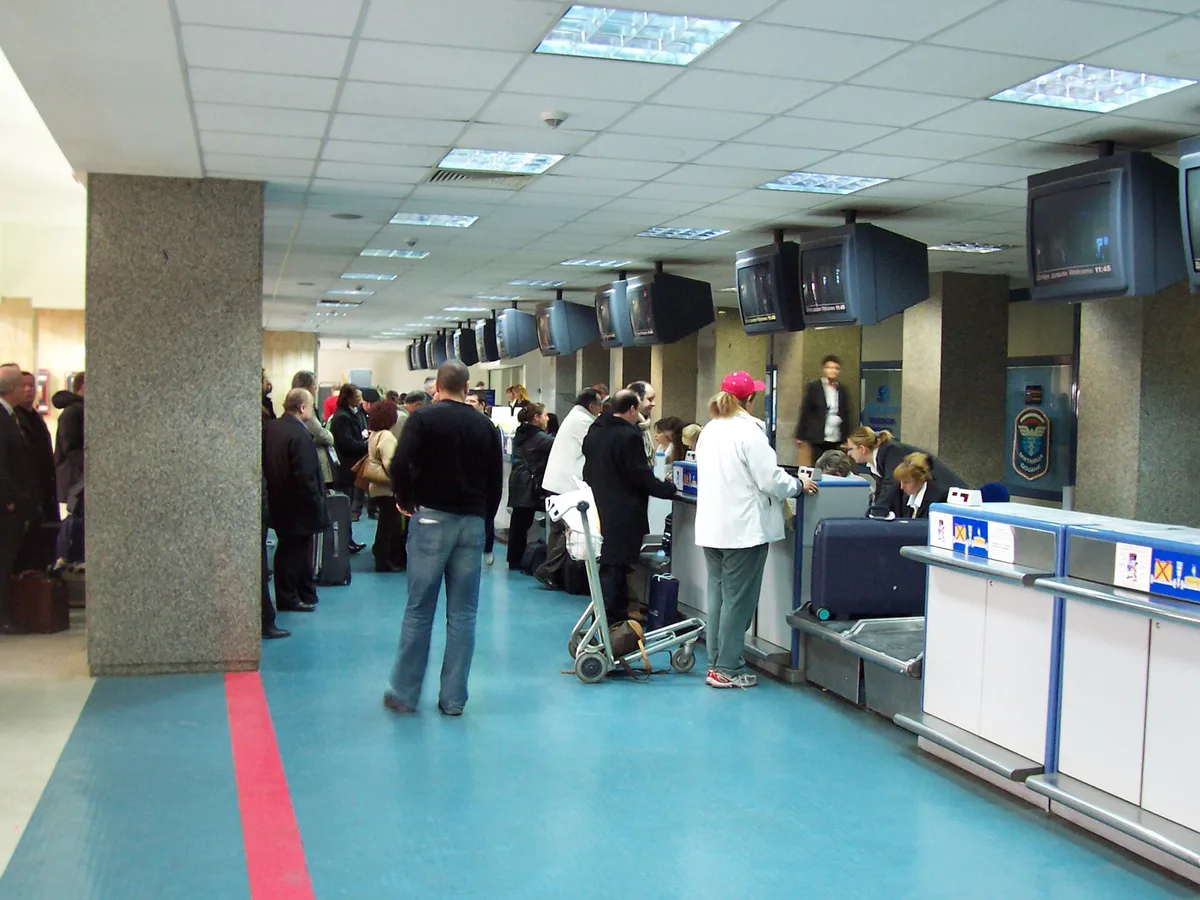
At check-in the agent or kiosk prints a bag tag carrying the license-plate code that encodes the flight, the route and the bag's own serial number. The bag drops onto an induct belt, where laser or camera arrays read the bar code and the system assigns a path. Before entering the sortation loop, every bag passes a security screening stage: standard explosive-detection equipment or CT scanners sized for baggage, integrated so a cleared bag continues automatically and a flagged one diverts to a search room. Screening is mandatory before loading worldwide, which is why a bag can be pulled after check-in even when the passenger has already passed security.
How does the system sort bags to the right flight?
Induct readers hand each bag's code to the control software, which compares the flight's departure time, the aircraft's loading position and the current conveyor congestion, then routes the bag down a sequence of diverters and mergers onto the correct makeup carousel or a holding area keyed to its flight. Two technologies dominate high-speed sorting: tilted-tray sorters, where individual trays tip to discharge a bag at the right chute, and destination-coded vehicles, small self-propelled carts on tracks that carry one bag each at roughly 10 meters per second and can route around congested sections. Early bag storage holds bags checked hours ahead, releasing them toward the aircraft in time for loading — the scheduling that keeps a morning-checked bag off the carousel of an afternoon flight.
Where do bags go wrong?
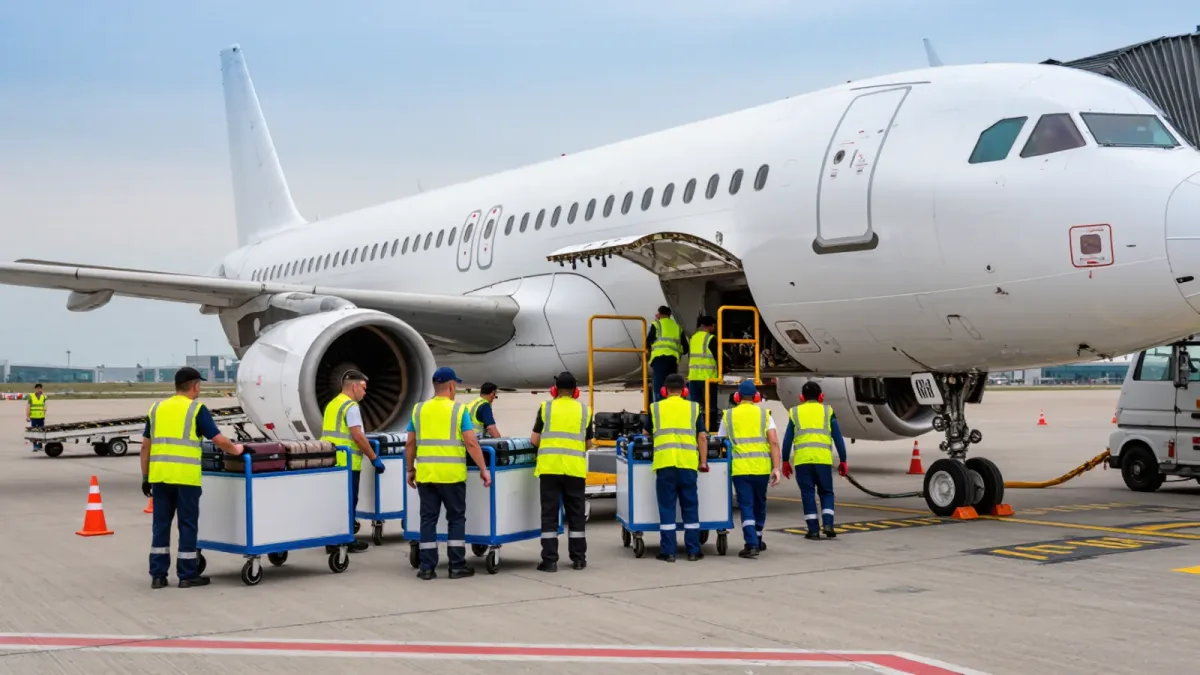
The industry's mishandling data points to transfers, not simple departures: a bag with a tight connection at a busy hub must be screened, sorted, carted across the ramp and loaded within the aircraft's turnaround, and any leg of that chain slipping produces a delayed bag. The industry-wide rate is low and has improved for decades — aviation bodies report a steady decline in mishandled bags per thousand passengers since 2007, driven by the license-plate standard and better transfer tracking. The other recurring failure is tag damage: a torn or unreadable bar code sends the bag to a manual coding station, where an operator keys the destination from the printed routing strip, adding minutes the connection may not have.
What is changing in the machinery?
Radio-frequency identification is the main upgrade path: an RFID tag carries the same data as the bar code but reads without line of sight and through dirt and tears, raising read rates well above optical scanning. Carriers committed globally to RFID bag tracking under Resolution 753, which requires them to track bags at four points — loading, transfer, arrival and first scan — and modern BHS projects pair RFID readers with the existing conveyor estate. For the traveler the visible result is narrower: the airline app's bag-status updates, and a lower chance that the last scan showing the bag loaded is also the last anyone knows of it.