Nothing drains a trip faster than a checkpoint line that refuses to move. The queue is not random. It is the visible edge of a very serious system.
Understanding that system is the fastest way through it. Here is what security screening is for, what it actually checks, and the habits that keep you out of the slowest lane. For related coverage, see How Airports Work — Behind the Scenes: How an Airport Terminal Actually Works.
Why the Lines Exist at All
Airport security protects passengers, staff, aircraft, and airport property from harm. Large crowds in one place create risk, and so does the sheer number of people on the planes themselves. Screening exists to stop threats before they board, as Wikipedia's overview of airport security explains.
That is why the process feels repetitive. Every bin, every scanner, and every question is part of one big filter. The line is the price of the filter working. Once you see it that way, the queue stops feeling personal.
What Screening Actually Checks
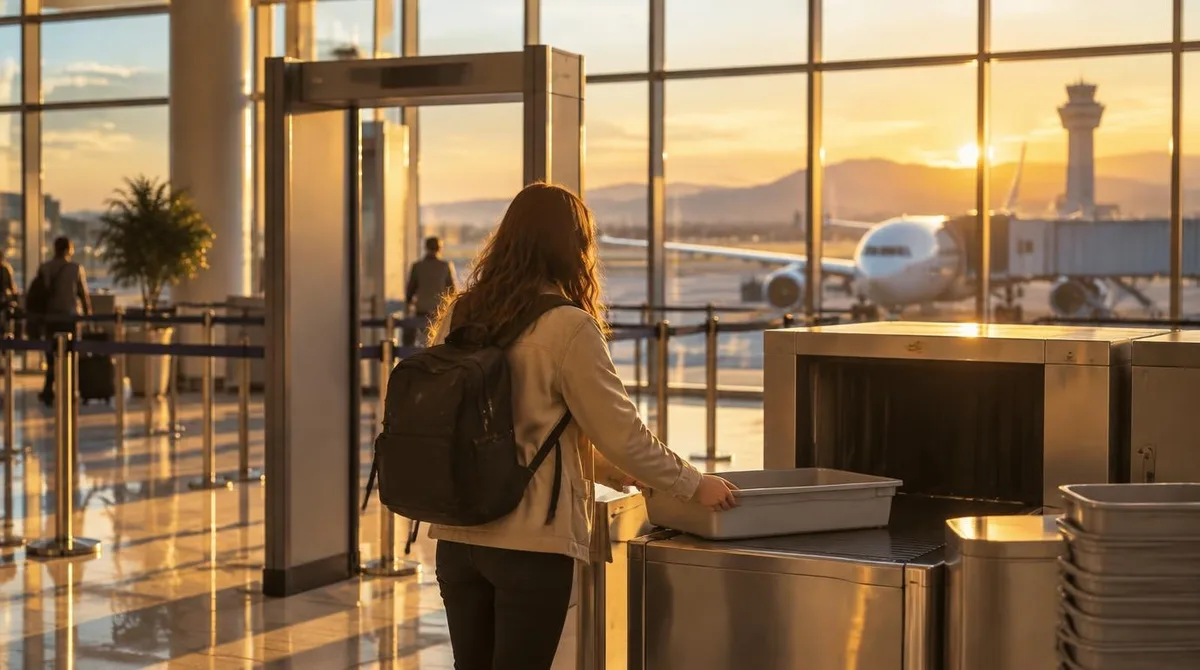
The equipment is more varied than it looks. Travelers pass through metal detectors or millimeter wave scanners. Bags ride through x-ray machines, and some checkpoints add explosives trace-detection portals, the so-called puffer machines.
Machine learning now helps automate some explosive detection. The goal never changes: separate safe travelers and safe bags from anything that is not. Move deliberately, answer plainly, and have your documents out early. Calm passengers speed up the whole system, because every recheck and every bin sent back adds a minute to everyone else's wait.
The Liquids Rule and Other Limits
Liquids get their own spotlight. Travelers cannot pass a checkpoint with liquids over 100 milliliters, about 3.4 U.S. fluid ounces. The limit traces back to the risk of liquid explosives, which standard x-ray screening struggles to tell apart from water. This connects to our earlier piece, The Liquids Rule Explained: What the 100ml Limit Covers at Airport Security.
U.S. standards also require non-medical liquids to ride in a quart-sized plastic bag, with only one bag per passenger. Put that bag where you can grab it in one motion. It is the single easiest way to keep the line moving behind you.
Faster Lanes for Frequent Flyers
Queues grew as screening grew. Airports responded with premium lines for first and business class travelers and for elite members of airline loyalty programs. The line you stand in often depends on your ticket, not just your timing.
Beyond that, a version of trusted traveler programs has spread to a few dozen airports around the world. The idea is simple: verify people ahead of time, then screen them with less friction at the gate. Supporters and critics still argue about the trade-offs, but the lanes exist, and knowing about them is worth real minutes.
Simple Habits That Save Time
Preparation beats luck at a checkpoint. Wear shoes that slip off, empty your pockets into your bag before you reach the bins, and keep your liquids bag on top where one grab frees it.
Dress for the tray as well. Skip the heavy belt and the extra layer if you can, and keep documents in the same pocket every trip. When every item leaves your body in one smooth sequence, the line ahead of you moves like clockwork.
Arrive with margin, watch the agents for lane guidance, and keep jokes out of the conversation entirely. Small habits read as calm, and calm travelers move fastest of all.
Conclusion: Work With the Line
Security lines are not an accident and not a plot. They are a system doing exactly what it was built to do, at very high volume, every day.
Know the liquids rule, respect the gear, and use the lanes you qualify for. The queue rewards prepared travelers, and being one of them costs nothing but a minute of packing the night before. Try it on your next flight and watch the line behave differently.