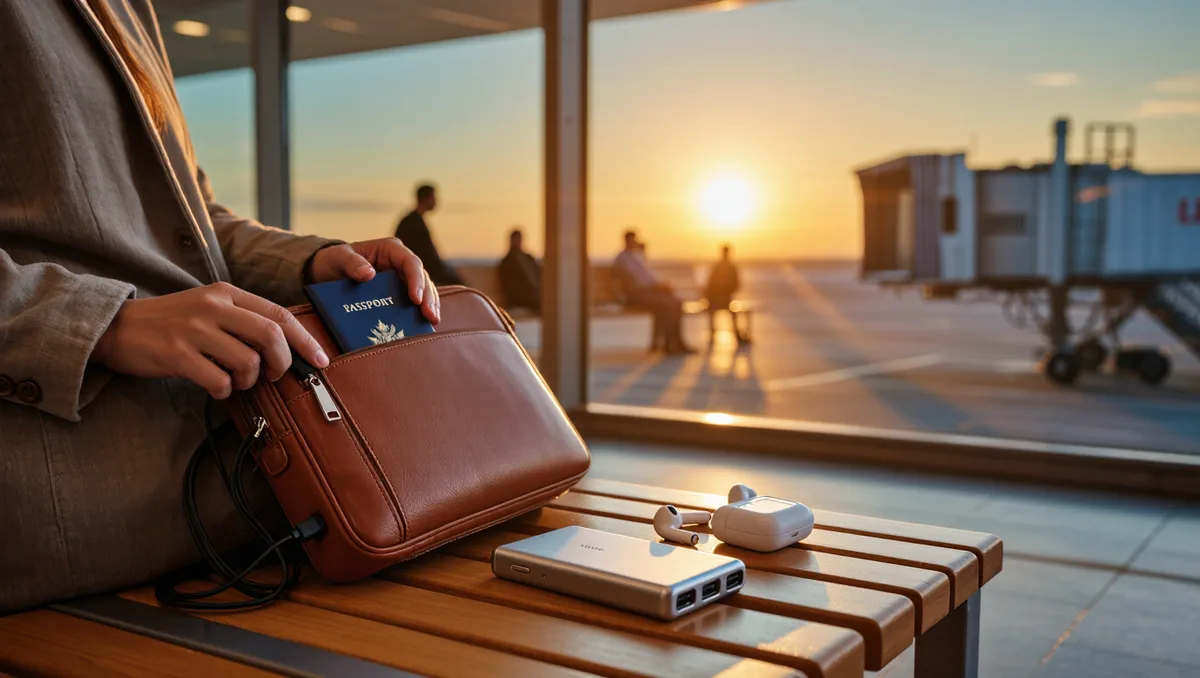
Every traveler knows the problem: the bag before a long trip fills with cables, batteries, and headphones that never get used. The test for any gadget is simple. Does it solve a connection, timing, comfort, or security problem on the road? If not, it stays home.
This guide sorts travel technology gadgets into two groups: the ones that earn their space and the ones that do not. The picks below lean on gear reviews from Best Products, which evaluated a range of 2025 consumer tech, and on the practical realities of airport days: long security lines, scarce outlets, and bags that need to close.
What actually earns its place in a carry-on?
Three jobs dominate a travel day: keeping devices charged, keeping them clean, and keeping track of them. Gear that does one of those jobs well is worth its weight. Gear that does none of them is a souvenir.
Power comes first. A dead phone at a connection point is not an inconvenience; it can mean a lost boarding pass, a lost hotel booking, and a lost map. According to Best Products, the Anker Prime 20K power bank can charge two laptops through a pair of fast USB-C connectors with a maximum output of 140 watts, and it carries a USB-A port as well, so up to three devices can charge at once. It even has a color screen to show charging status. That is one brick replacing a tangle of adapters, which is exactly the trade a packed bag wants. For related coverage, see How ADS-B Works: The Broadcast Behind Every Live Flight Tracking Map.
Cleaning is the unglamorous second job. Touchscreens collect fingerprints fast, and keyboards on the road collect crumbs. The same review highlights a small OXO laptop cleaner with a microfiber pad and a retractable soft brush, a pocket-sized fix for smudged screens and dusty keys. It costs little and weighs almost nothing, which is the profile of a genuine keeper. We covered a connected angle in Predictive Maintenance: How Airlines Fix Aircraft Before They Break.
Tracking is the third job. An AirTag inside a checked bag gives a traveler something no airline app can: a personal view of where the suitcase actually is. Best Products points to the Pelican Marine holder as a rugged case for the tracker, with a shock-resistant build that includes Dupont Kevlar and an IP68 rating, meaning it is sealed against water and dust. It comes with a carabiner, so it clips to a zipper pull and disappears.
Which comfort items are worth the weight?
Comfort tech splits cleanly into keep and skip. Audio is a keep. A long flight or a noisy gate area is one of the few places where a gadget changes the experience directly, and earbuds double as sleep aids on red-eyes.
For travelers who want sound tuned to their own ears rather than a factory preset, Best Products describes the Denon PerL Pro earbuds, which use technology from Masimo, a maker of medical-grade monitoring devices, to tailor the listening experience to a person's hearing. The review notes they perform in line with their price on sound, noise cancellation, and battery life, and a cheaper PerL model exists. Whatever the brand, the rule holds: noise cancellation and a long battery life matter more on a nine-hour flight than any extra feature.
A speaker is usually a skip, with one narrow exception. Best Products covers the Beats Pill Bluetooth speaker, which has an IP67 water- and dustproof rating, up to 20 hours of battery life, and compatibility with both Apple and Google tracking services. That profile suits a beach day or a rental-house week, where a speaker genuinely earns its space. For a city itinerary, it stays home.
What about the clever extras?
Some gear sits between must-pack and gimmick, and the deciding factor is the trip, not the object. A wallet with an RFID-blocking coating, for instance, protects cards from skimming in crowded transit hubs. Best Products describes the Ekster Parliament, a leather bifold with an aluminum card pocket that ejects cards at the press of a button, room for at least ten cards, and an optional Bluetooth tracker with a maximum range of 200 feet that is powered by light, so it never needs a battery. On a trip built around packed markets and metro rides, that is a reasonable pick. On a resort week, it is extra weight.
The same filter applies to the obvious skips. A tablet that duplicates a phone's job, a travel router for a trip with one hotel, a second camera when the phone shoots well: each fails the test because it solves a problem the traveler does not have. The pen is the borderline case. Best Products praises the Ridge ballpoint, an aluminum pen with a bolt-action retractor, as a reason to step away from screens. Analog, yes, but a pen that survives being sat on and fills out customs forms is a fair trade for one pocket.
What this means for your packing list
Build the kit around the day, not the gadget. A practical baseline for most trips looks like this:
- One high-output power bank, sized so a phone and a laptop both survive a long travel day.
- One compact cleaning tool for screens and keyboards.
- A tracker in a rugged case for any checked bag.
- Noise-cancelling earbuds with proven battery life.
- One comfort extra, chosen for the trip type: a rugged speaker for beach weeks, nothing for city breaks.
Everything else is negotiable. And remember that some of the best travel tech is not in the bag at all. Airlines fitting satellite Wi-Fi are changing what a long flight feels like, and biometric boarding is steadily removing the printed document from the process. The less the gadgets have to compensate for, the smaller the kit gets.
The takeaway
The evidence from the reviews above points one way: the gadgets that earn baggage space are the ones that attack a specific failure point of travel, a dead battery, a filthy screen, a lost bag, or a roaring cabin. Everything else is packing theater. Pack for the failure points, skip the rest, and the bag closes easier on every trip that follows.