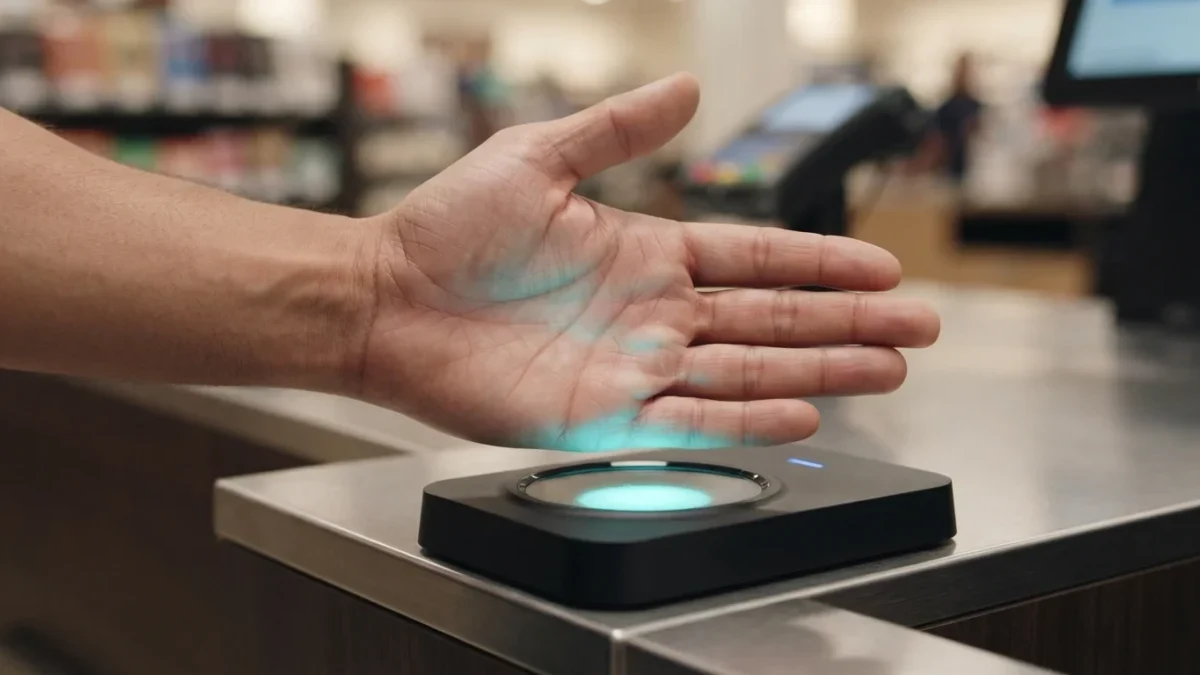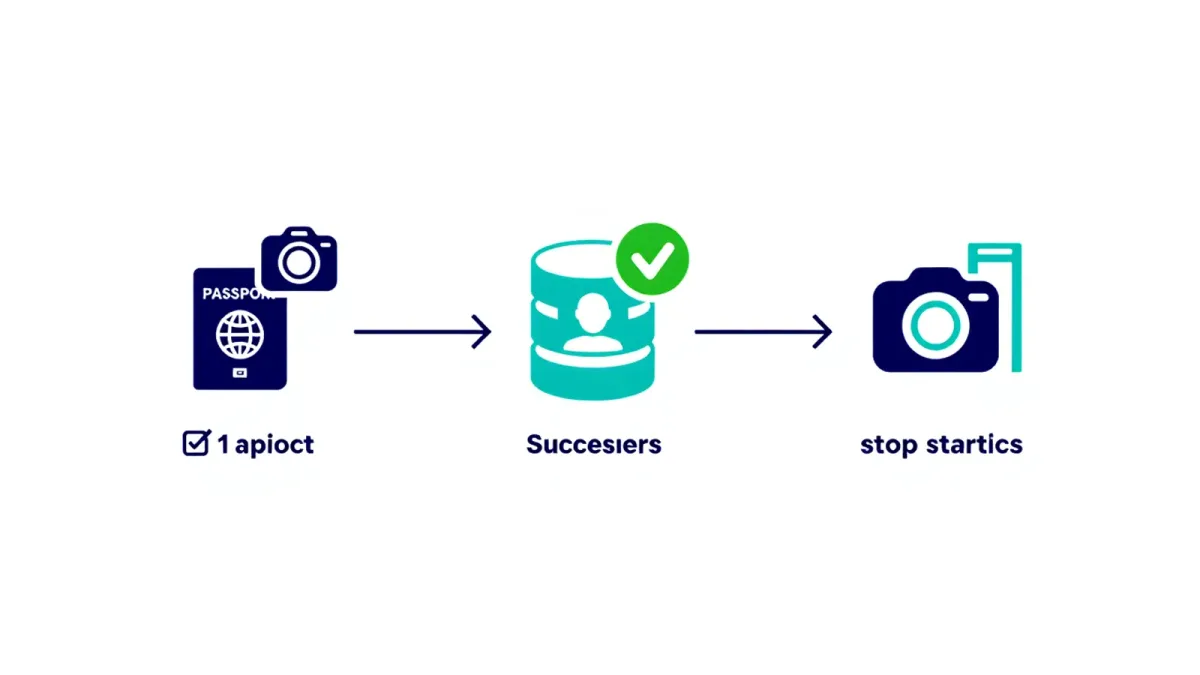
Biometric boarding works by comparing a live photograph of your face, taken by a camera at the gate, against an image the government already holds in a travel database — for international departures from the United States, the photo U.S. Customs and Border Protection (CBP) has on file from passports, visas, and prior travel. The match takes about one to two seconds per passenger, per CBP's program descriptions, and replaces the boarding-pass scan entirely: you look at a camera, the system confirms your identity and flight eligibility, and you walk down the jet bridge.
This guide describes published program mechanics; it is not legal advice on privacy or data retention, which are governed by the agencies' own rules.
What happens to the photo after the gate?
This is the most common traveler question, and the published answer matters. In the U.S. international-departure flow, CBP states that photos taken for face comparison are deleted within 12 hours after the flight's departure, per the agency's own privacy documentation — the biometric match happens against the pre-existing gallery, and the gate photo is not added to a growing database. Travelers can also opt out by presenting a boarding pass for manual document check instead, a right printed on CBP's signage at biometric gates.
Domestic U.S. boarding is different in legal basis: CBP's statutory biometric exit authority covers international travel, so the domestic facial-boarding programs airlines run operate under airline-controlled matching against the airline's own passenger manifest photos, and each program's terms control retention.
Where is biometric boarding already routine?
- U.S. international departures: CBP's biometric exit program covers major gateway airports, with facial comparison at hundreds of gates under airline partnerships announced since 2018-2019.
- Europe: the Entry/Exit System (EES) rolling out from late 2025 registers biometrics from non-EU travelers at border crossings, feeding self-service gates.
- Asia-Pacific hubs: Singapore, Tokyo, and Seoul have run facial and iris corridors for years, with boarding integration expanding.
The pattern across all three regions is the same architecture: enroll once at a border, then reuse the stored biometric for touchpoints — bag drop, security, lounge, gate — inside a single trip.
How accurate is facial comparison, and what happens on a mismatch?
Modern matching algorithms achieve very high accuracy on cooperative, front-lit gate images, and published error rates from U.S. testing programs have measured false-negative rates — legitimate travelers rejected — below 1 percent in recent evaluations, with accuracy improving each test cycle. A mismatch is not an accusation: the gate camera queues you to a podium where an agent checks documents manually, which costs minutes, not the flight.
Failure modes worth knowing: heavy changes in glasses, headwear that is not removed when requested, and extreme low light degrade the live image. The camera wants the same front-facing photo your passport took.
What should travelers weigh?
The convenience case is real: fewer documents handled, faster boarding lanes, and one identity check reused across the airport. The privacy case deserves equal statement — biometric matching normalizes identity checks against government galleries, retention rules vary by country, and opt-out procedures differ by airport. Read the signage at the gate: every compliant program states who holds the data, how long the live photo is kept, and how to decline. The technology is settling in as infrastructure; the terms around it are still each program's own.