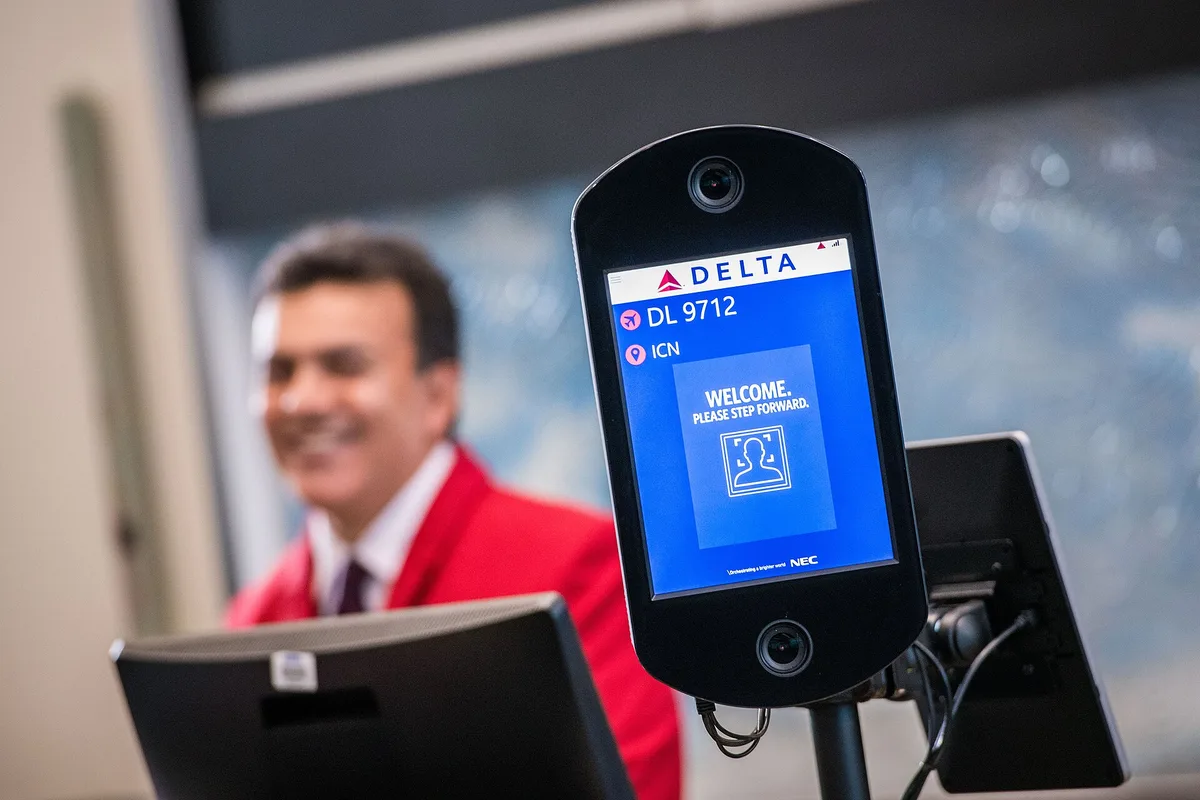
The boarding pass is starting to share its job with a face. Facial recognition at airports runs a simple operation: an algorithm compares a live facial image against a reference image linked to a claimed identity. At the gate, that comparison replaces the manual document check. The line moves at the speed of a camera shutter.
The caveat: the tech's accuracy is published as strong but not perfect, and its data handling is a policy question that moves slower than the cameras. Travelers keep choices in most programs — the choice just needs finding. We covered a connected angle in Head-Up Displays in Airliners: Why Pilots Keep Their Eyes Out of the Cockpit.
How Does Face-Based Boarding Actually Work?
The published mechanics run on two modes, per the standard account of the systems. One-to-one verification compares the live image to the reference photo tied to the traveler's booking — the boarding-pass mode. One-to-many identification searches an image against a database, and that second mode is where the policy debate lives.
At a typical gate, the airline's camera captures the face, the system verifies it against the government-confirmed photo from the booking, and the passenger walks through without showing anything at all.
Where Did the Systems Come From?
From decades of slow development. Work on facial comparison began in the 1960s as a computer application, per the published history. The systems spread through smartphones and consumer tech before airports scaled them. The airport version is the same math with better light, better cameras, and a controlled queue. That is why gate accuracy now beats the older expectations.
Airlines adopted it for throughput: a camera processes a boarding faster than a document check, and the published pattern shows wider use wherever lines and identity checks meet.
What Should Travelers Know About Data and Choice?
Three practical points. Programs built on government-verified photos keep the reference on the government side, and retention follows the operating country's law. Opt-out paths exist in most programs: a manual document check remains, though sometimes unmarked. And the two modes differ in consent. Agreeing to verify a face against your own booking is not the same as allowing a database search. For related coverage, see How Flight Search Engines Work: GDS, NDC and Why Prices Differ by Site.
The published privacy debate around the tech is real, and it moves through regulators at a pace the terminals do not wait for. The traveler's lever is the opt-out and the question asked before enrolling.
Where Does the Technology Spread Next?
Across the whole journey, not just the gate. The same architecture fits bag drop, lounge entry, and border lanes, and airports run pilots that string them into one walk-through path. The vendors' end state — the face as the ticket through the terminal — already runs in fragments at several hubs.
The friction point is shared use: a face enrolled with one carrier's program does not automatically work at another's gates, which is why the paper boarding pass survives in the backpack for now.
Conclusion: A Fast Check That Deserves a Slow Question
Facial recognition at the gate is working, published tech. A live face is verified against a booking-linked reference, and the camera replaces the manual check. The throughput case is real, and the accuracy is strong. The choice to join in still exists in most programs. Travelers who want the speed should enroll with the government-backed programs. Travelers who want the choice should find the opt-out line before the day it matters.
The document check survives for another reason too: the camera fails on the rare day, and the manual desk is what keeps a full gate from becoming a full hallway. The published system design treats biometrics as the fast path, not the only path, and that redundancy is why the tech can spread without a guarantee of perfection.
The speed case closes on numbers the traveler can feel. A document check takes seconds per passenger and a human decision per edge case. A camera takes the same seconds without the edge cases, which is why gates that ran the pilots rarely go back. The queue is the product, and the face is the fastest document most people carry.